
Reviewed · PUERTO VALLARTA WHALE WATCHING
Whale and Dolphin Watching with a Biologist in Puerto Vallarta
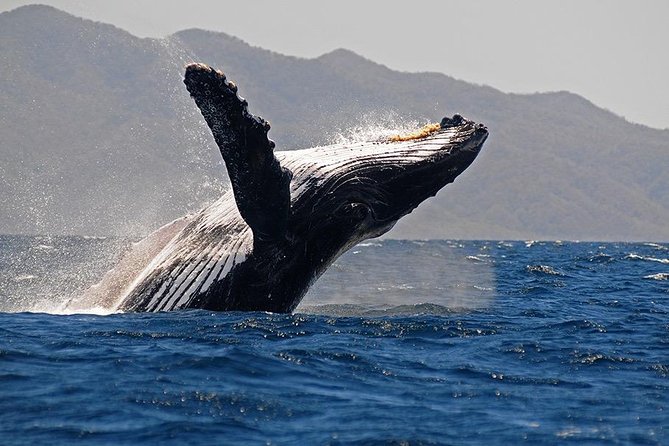
Puerto Vallarta’s winter humpback season turns a simple boat ride into a lesson in animal behavior. You may see mothers with calves, males competing for a female, or a whale breaching close to the boat, while a marine biologist explains what you are seeing and helps record useful research information.
I like two things right away: the chance to hear whale songs through a hydrophone, and the small boat, which puts you close to the action without turning the outing into a crowded spectator sport. The main drawback is that wildlife follows its own timetable. Some departures see whales within 20 minutes, while others may spend an hour searching before the show begins.
Key points before you book
- Four hours on the water: The tour leaves from Opequimar Centro Marino in Marina Vallarta and returns to the same spot.
- A science-led outing: Your guide may be Jemma, Gemma, Camilla, or another member of the biology team. You can help with ongoing whale and dolphin research.
- Winter wildlife: Humpback whales are the main attraction, with dolphins, turtles, giant mantas, and occasional orcas or false orcas also possible.
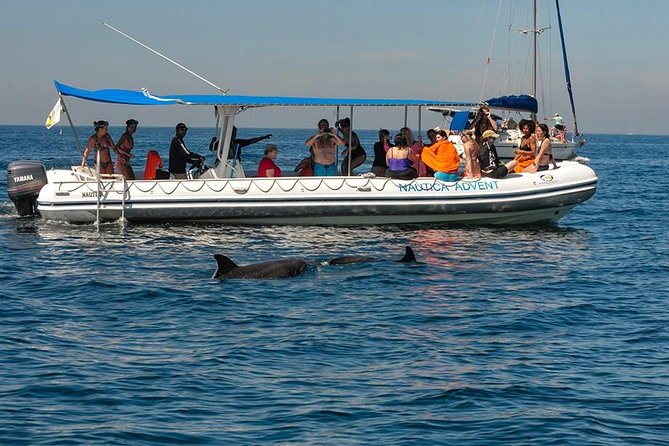
- Small covered boat: Groups are limited to 20 people, and several departures have carried about 12 to 16 passengers.
- Strong recent record: The experience has a 4.9 rating from 667 reviews, with 97 percent of participants recommending it.
- Plan for basic boat conditions: There is no bathroom on board, and the ride requires decent weather.
Why this is more than a standard whale watch
Many whale trips amount to a captain spotting a blow, pointing, and racing over for a look. This one puts the biology first. Before you leave, the guide may show you baleen and a whale vertebra, explain the local humpback population, and outline the kinds of behavior you might see.
That preparation matters. A whale lifting its tail is impressive, but it becomes far more interesting when you understand why the animal is moving in a certain way. A calf beside its mother, a male escorting a female, or a tail slap used in communication all tell a different story.
The research element also gives the outing a useful purpose. Wildlife Connection runs research programs involving whales and dolphins, and your observations help support that work. You are not simply consuming a wildlife spectacle. You are taking part in an effort to learn more about animals that return to Puerto Vallarta each winter.
The company says its field experience allows the crew to find the animals, or provide a refund if they cannot. Still, no responsible wildlife operator can control nature. You should read that promise as a strong effort to locate whales, not as a guarantee that every animal will breach beside your seat.
More dolphin encounters near Puerto Vallarta:
- Watch and Swim with Dolphins in the Wild
★ 4.5 · 668 reviews - Whale & Dolphin Watching Cruise in Puerto Vallarta All Inclusive
★ 4.0 · 212 reviews - Wild Dolphin Encounter & Snorkeling Adventure
★ 5.0 · 147 reviews
Meeting the biologist and captain
The biology team is central to the experience. Guides named Jemma, Gemma, and Camilla are repeatedly singled out for their ability to explain whale behavior in plain language while keeping the mood light. The listed team includes biologists with master’s degrees in marine ecology, a science journalist, and a professional wildlife photographer whose work has appeared with National Geographic and Animal Planet.
Your guide does more than identify a species. She may explain parenting, communication, migration, social behavior, or the difference between the dolphin species in the bay. The pre-cruise presentation is especially useful for first-time whale watchers because it gives you a visual and scientific foundation before the boat leaves the marina.
The captain has an equally important job. Jorge, Cesar, George, and other captains are praised for smooth handling and careful positioning. A good captain does not simply point the bow at an animal. He watches the whale’s pattern, approaches from a respectful position, and gives you a chance to see a back, fluke, breach, or fin without pressing too close.
That teamwork shapes the day. The guide reads the behavior, while the captain handles the boat and keeps the group safe. On several outings, the crew used the vessel’s position to offer clear views from both sides.
Leaving Marina Vallarta for the bay
The meeting point is Opequimar Centro Marino, at Av. Paseo de la Marina Sur 214 in Marina Vallarta. You return here at the end of the roughly four-hour trip.
The boarding process includes life jackets, and the boat has a cover. That roof is useful in Puerto Vallarta’s strong sun, especially on an afternoon departure. The covered design also gives you some shelter when the wind picks up, though a small boat is still exposed to movement and spray.
Group size makes a real difference. The maximum is 20 people, and many outings have been closer to 12 or 16. A very small boat gives you a better chance to look over either side and move your attention quickly when the guide points out an animal.
There is no bathroom on board. Use the facilities before departure and keep that limitation in mind if you are traveling with young children or anyone who needs frequent breaks. Service animals are allowed, the meeting point is near public transportation, and most people can participate.
The activity is not recommended for anyone more than seven months pregnant. Since conditions can be windy and the boat moves at speed between sightings, ask your doctor about any personal concerns before booking.
Finding Puerto Vallarta’s winter humpbacks
Humpback whales come to the Puerto Vallarta area during the winter months to mate and give birth. That seasonal pattern is the reason this trip is offered as a combined whale and dolphin outing during winter.
The first part of the search may feel quiet. One departure went about an hour without a sighting before reaching an area filled with mothers, calves, and adult males. Another group began seeing whales within 15 or 20 minutes. Both experiences are normal for a wildlife trip.
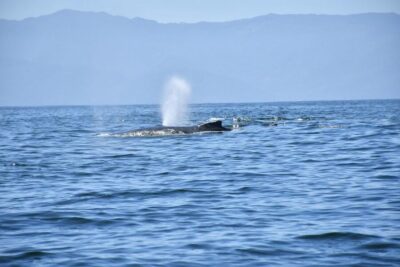
Once the crew locates whales, the pace changes. You may watch a mother and calf traveling together, a baby learning to communicate, or a male competing with other males for access to a female. Some outings have seen six active adults in one area, while others have counted 15, 20, or even 30 whales over the course of the trip.
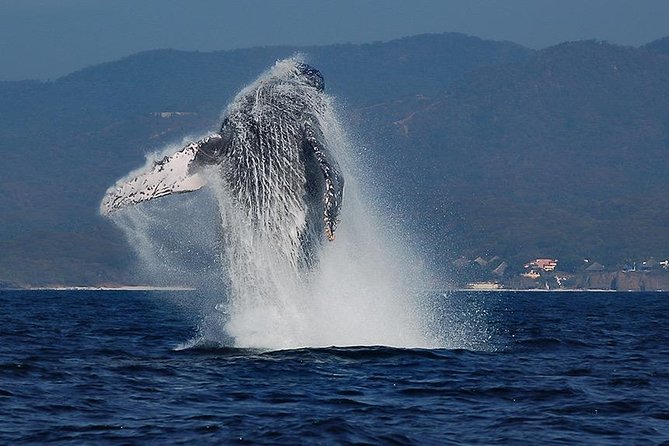
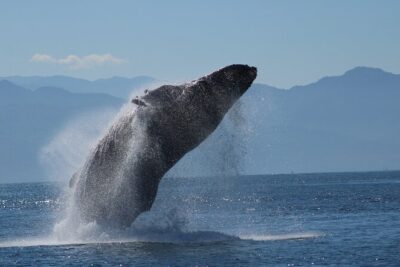
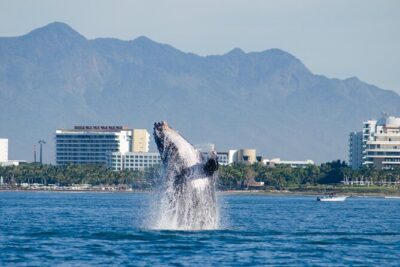
Breaching is never promised, but it can be spectacular. Several departures have seen full breaches, repeated tail slaps, pectoral-fin activity, and calves practicing their own moves. One group watched a calf frolic near its mother while the mother repeatedly slapped her tail, apparently teaching or reinforcing communication.
The right camera habit is simple: keep watching even after a whale disappears. The guide may predict where it will surface, but the animal can appear in an unexpected place. A phone with a wrist strap or a secure camera grip is more useful than a large bag of equipment.
More whale watching trips from Puerto Vallarta:
- Sunsets and Whales Mega Yachts ALL INCLUSIVE: Puerto Vallarta
★ 5.0 · 509 reviews - Whale Encounter Puerto Vallarta
★ 5.0 · 469 reviews - Whale Watching Cruise In Puerto Vallarta & Nuevo Vallarta
★ 5.0 · 398 reviews - Small-Group Half-Day Whale-Watching Tour in Puerto Vallarta
★ 5.0 · 334 reviews
Listening to whales beneath the boat
The hydrophone is one of the best details on this tour. It lets you hear whale songs underwater, turning the experience from a visual search into a sound lesson.
You may hear different songs from male whales, with some sounds close to the boat and others echoing farther away. The guide can connect the sound to the animal’s behavior and explain why the singing is important to the species.
This is also a good reason not to judge the trip only by the number of breaches. A quiet period can still offer a close look at social behavior or a chance to hear whales communicating below the surface. The biology adds value during the pauses.
Dolphins, turtles, mantas, and other sightings
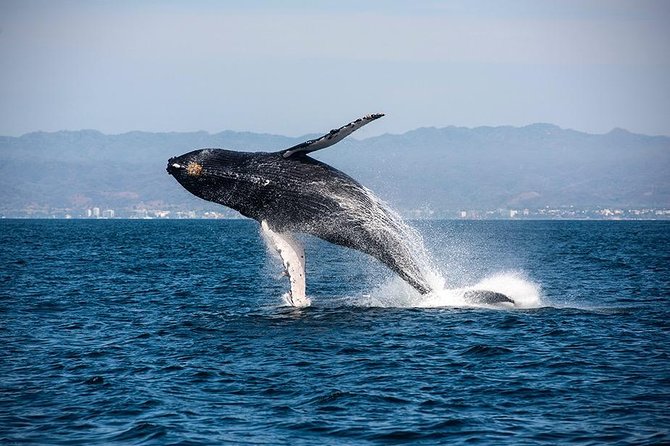
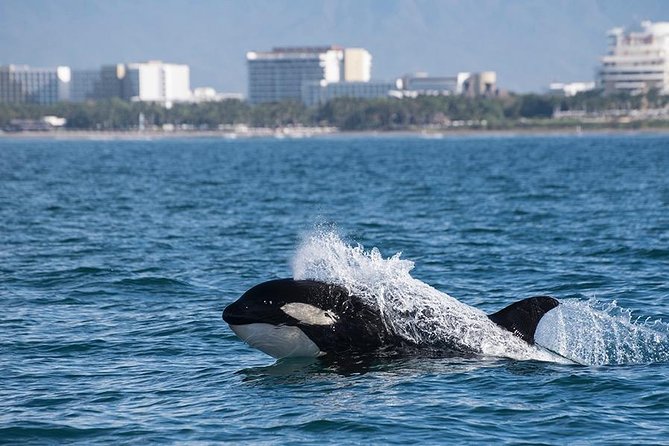
Whales are the main reason to book, but the bay supports plenty of other life. Possible dolphin sightings include bottlenose, spotted, spinner, and rough-toothed dolphins. The crew may also look for orcas or false orcas, though those are less certain encounters.
Dolphins can move quickly and cover a wide area. You might see a pod traveling near the boat or playing in the same general area as whales. A large dolphin pod can be as memorable as a single whale because the action spreads across the water.
Giant mantas and marine turtles are also possible. Recent outings have included turtles, manta rays, sea lions, and blue-footed boobies. These are welcome additions, not guaranteed stops, so treat them as part of the natural variety rather than a fixed checklist.
The guide may point out birds and other wildlife while the boat moves between whale groups. That keeps the ride interesting during the search and helps you notice more than the largest animals in the bay.
Food, comfort, and the small-boat tradeoff
Several outings included sandwiches and soft drinks, and one guide even prepared a small birthday treat. These touches are pleasant, but I would still eat a light meal before leaving and bring water if allowed by the operator.
The small boat gives you better sightlines than a large sightseeing vessel. You can often turn quickly, see both sides, and feel close to the water. The tradeoff is less space, no restroom, and a greater sense of the boat’s motion when the sea is rough.
A covered boat helps with sun and wind, but it does not make the trip luxurious. Think of this as a working wildlife vessel with comfortable enough seating, not a cruise ship. Wear practical clothing, secure loose items, and expect the guide to ask you to focus on the animals rather than on constant photography.
The four-hour length feels well judged. It gives the crew time to search, watch more than one whale group, look for dolphins, and return without turning the outing into an all-day commitment.
Is the $105 price fair?
At $105 per person, this is not the cheapest boat trip in Puerto Vallarta. The value comes from the combination of a small group, a biology-led presentation, research participation, a hydrophone, and roughly four hours on the water.
You are also paying for a crew that understands how to position a boat around whales. That matters more than a fancy vessel. Seeing a breach from the wrong angle can mean a quick glimpse, while a well-timed position may give you the whale’s full body, fluke, or calf beside its mother.
The price makes the most sense during the winter humpback season, when the chance of multiple whale encounters is strongest. It is also a good fit if you want to understand what you see, not just collect a few photographs.
For a family, the educational side can justify the cost. Teenagers in particular may appreciate the close views, dolphin activity, and whale sounds. Couples and small groups may value the intimate setting and the chance to take home something more memorable than a standard cruise.
Afternoon departures and changing conditions
Do not assume the morning is automatically best. One morning outing reportedly found no whales, while an afternoon group saw mothers, calves, males, dolphins, and repeated breaches soon after leaving.
That does not make afternoon departures reliably better. It simply shows that whales do not follow a sightseeing schedule. Choose the departure that fits your day, then let the guide and captain work with the conditions.
Weather remains an important factor. The tour requires good weather, and a departure may be canceled if conditions are poor. In that case, you are offered another date or a full refund. If you cancel, you receive a full refund only when you do so at least 24 hours before the start time. Cancellations inside 24 hours are not refunded.
Who should book this whale tour?
I would choose this trip if you care about marine life, want a guide who can explain behavior, and prefer a small boat to a large sightseeing vessel. It suits first-time whale watchers because the pre-cruise lesson gives you a clear way to understand the animals.
Families with older children and teenagers should find plenty to hold their attention. Couples can expect a memorable shared outing, especially if you happen to see a mother and calf or hear whale songs through the hydrophone.
You may want another kind of boat trip if you need a bathroom, dislike motion, or expect guaranteed close-up action from the moment you leave the marina. Wildlife watching always includes waiting, and the boat is small enough for conditions to matter.
Should you book it?
Yes, if you are visiting Puerto Vallarta during humpback season and want the science behind the spectacle. The strongest reasons are the biologist guides, the careful captains, the research connection, and the chance to hear whales underwater.
Book with realistic expectations. You may see one whale, or you may encounter mothers, calves, males, dolphins, turtles, mantas, and several dozen whales. The unpredictability is part of the bargain. At $105, this is a sound choice for a serious four-hour wildlife outing, especially if authentic animal behavior matters more to you than luxury facilities.
FAQ
Where does the whale and dolphin tour meet?
The tour begins at Opequimar Centro Marino, Av. Paseo de la Marina Sur 214, Marina Vallarta, Puerto Vallarta, Jalisco, Mexico. It ends back at the same meeting point.
How long does the experience last?
The tour lasts approximately four hours, including time spent searching for and watching wildlife before returning to Marina Vallarta.
What animals might I see?
Possible sightings include humpback whales, bottlenose dolphins, spotted dolphins, spinner dolphins, rough-toothed dolphins, marine turtles, giant mantas, orcas, and false orcas. Recent outings have also included sea lions and blue-footed boobies.
Is the tour led by a marine biologist?
Yes. The tour is led by a biologist who specializes in cetaceans. Guides may include Jemma, Gemma, or Camilla, and the team also includes professionals with advanced marine ecology and wildlife communication backgrounds.
Can I participate in research?
Yes. Wildlife Connection runs research programs involving whales and dolphins, and your participation during the tour helps support that work. The guide shares information about the research and explains how you can take part.
How many people can join the boat?
The maximum group size is 20 people. Several outings have had about 12 to 16 passengers, allowing clear views from both sides of the small boat.
What is the cancellation policy?
You can cancel at least 24 hours before the start time for a full refund. Cancellations or changes made less than 24 hours before departure are not accepted for a refund. If poor weather or an insufficient number of bookings cancels the tour, you are offered another date or a full refund.
New in Puerto Vallarta
- Puerto Vallarta: All you can drink Bar Crawl★ 4.8 · 4 reviews
- Whale Watching Guaranteed Experience in Puerto Vallarta★ 5.0 · 7 reviews
- Yelapa: Catamaran Cruise with Lunch and Open Bar★ 4.5 · 4 reviews
- Outdoor Zipline Adventure★ 4.8 · 6 reviews
- Puerto Vallarta: Versalles at Night Gastro Tour & Cocktails★ 4.7 · 4 reviews
- Surf Lesson for Beginners in Sayulita & Punta de Mita★ 5.0 · 3 reviews
- Whale Watching★ 4.0 · 10 reviews
- Sunset Hike to a secluded Beach + Mexican snack★ 5.0 · 8 reviews
Puerto Vallarta Whale Watching, compared.
Sunsets and Whales Mega Yachts ALL INCLUSIVE: Puerto Vallarta
Read our review →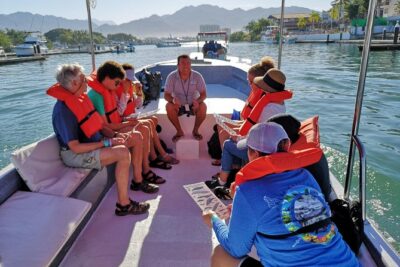
Whale Watching Cruise In Puerto Vallarta & Nuevo Vallarta
Read our review →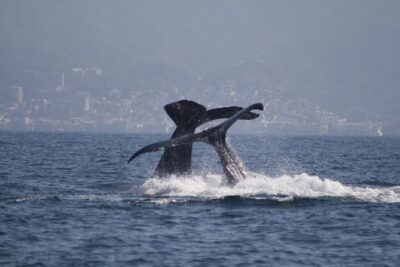
Small-Group Half-Day Whale-Watching Tour in Puerto Vallarta
Read our review →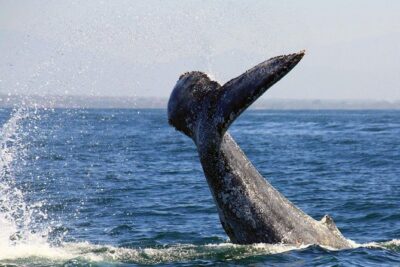
Whale & Dolphin Watching Cruise in Puerto Vallarta All Inclusive
Read our review →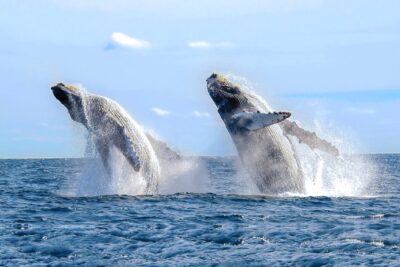
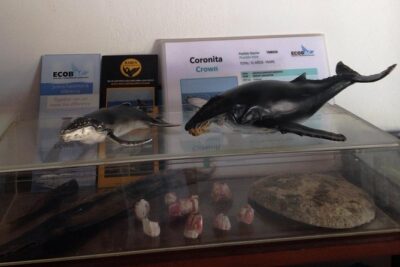
Whale Watching Guaranteed Experience in Puerto Vallarta
Read our review →Browse the lists this tour appears in