
Reviewed · PUERTO VALLARTA CHOCOLATE WORKSHOPS
Bean to Bar Chocolate Workshop in Puerto Vallarta
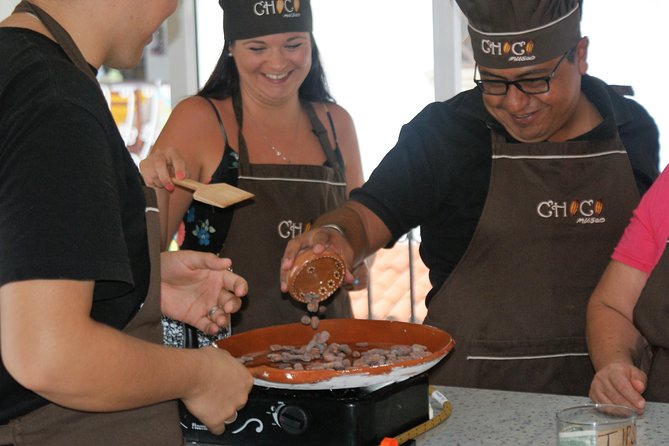
Chocolate here is more than a sweet treat. In this two-hour workshop, you follow cacao from bean to finished bar, with history, tasting, and hands-on work mixed together. The story reaches back to the Olmecs, Maya, and Aztecs, then follows chocolate into Spanish and European traditions.
I like the way you make several drinks and handle the cacao yourself, rather than simply watching a demonstration. I also like the small-group setup and the chance to flavor your own chocolates. The main drawback is practical: the class takes place indoors, and Puerto Vallarta can be hot and humid, so confirm the air-conditioning is running if you are sensitive to heat.
Key points to know before booking
- You roast and work with cacao beans: The class can include shelling beans, making cacao-shell tea, preparing hot chocolate, and creating molded chocolate.
- Your chocolate is your own design: You choose toppings, spices, and other ingredients for bars to take home.
- The history is part of the experience: The guide connects chocolate with Olmec, Maya, Aztec, Spanish, and European traditions.
- Guides make a real difference: Rodrigo, known as Rod, Martin, Elias, and Zoar are praised for humor, patience, and clear teaching.
- Families fit well here: Children from age five can participate, and the activities have held the attention of children around nine and thirteen.
- The setting is central and self-guided to reach: You meet at ChocoMuseo, Josefa Ortiz de Domínguez 128, in Centro. Transportation is not included.
What the Puerto Vallarta chocolate workshop is really about
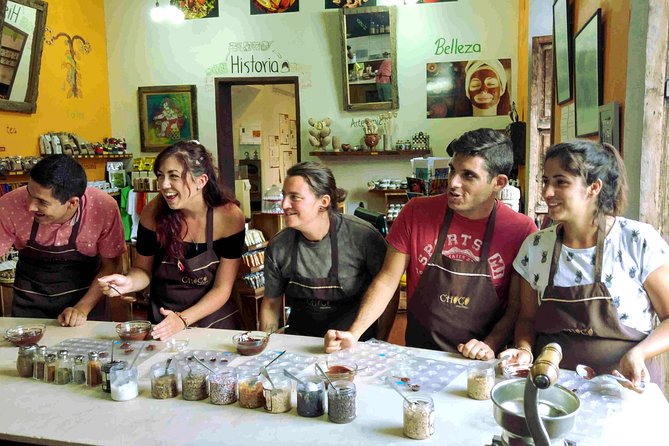
The ChocoMuseo Bean to Bar workshop is best understood as a short cultural lesson with edible homework. You do not just sample finished chocolate. You learn where cacao grows, handle the raw ingredients, taste different preparations, and make something of your own.
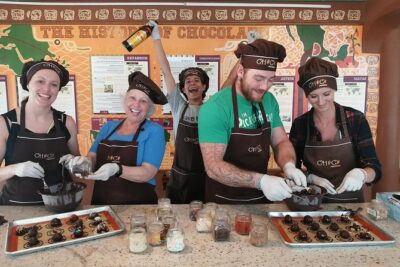
The class is offered in English and costs $62.90 per person. For a two-hour activity in central Puerto Vallarta, that is not the cheapest way to eat chocolate, but it is a fair price if you value instruction and participation. The fee includes the museum guide, cacao beans, chocolate, toppings, an apron, and a hat for the workshop.
I would not book this expecting a formal museum tour with room after room of exhibits. The museum visit is part of the guided class, and the main reward comes from the teaching and the workbench. If you want a quick tasting, the shop downstairs may be enough. If you want to understand the ingredient and make your own bars, the workshop earns its price.
More chocolate workshops in Puerto Vallarta:
- Finca 18 Puerto Vallarta Tequila Tour + Chocolate Pairing
★ 5.0 · 393 reviews - Chocolate Tour in Vallarta
★ 5.0 · 226 reviews - Chocolate and truffles workshop
★ 5.0 · 157 reviews
Starting at ChocoMuseo in Centro
You meet at ChocoMuseo Puerto Vallarta at Josefa Ortiz de Domínguez 128, in the Centro neighborhood. You arrange your own way there, since transportation to and from the museum is not included. The location is near public transportation, which helps if you are staying outside the central area.
Allow a little time to arrive before the scheduled start. One useful tip is to check out the samples in the shop before class, if time allows. The shop is small, and the sales staff are described as low-pressure, so you can look around without feeling pushed into buying something.
The workshop area is upstairs. Stairs have handrails, and the class uses counter-height stools. That seating works well for a hands-on activity, though it may not suit everyone for a full two hours. Service animals are allowed, and the activity is open to most participants, but anyone with mobility concerns should consider the stairs and seating before booking.
The advertised maximum is eight people. One family account described a group of nine including their family, so the exact number may vary slightly. Either way, this is a much smaller setting than a large cooking demonstration. A small group gives the guide more room to answer questions and help children with the practical steps.
The cacao story, from Olmecs to chocolate bars
The class begins with the plant and the bean. You learn where cacao grows and how the bean changes as it moves toward chocolate. That basic explanation matters because it gives you a better sense of what you are tasting later. Chocolate is not simply picked from a tree in finished form.
The guide then places cacao in Mexican history. The Olmecs, Maya, and Aztecs all used cacao, and the class explains how its role changed over time. You also learn about the Spanish and European influence that shaped the chocolate familiar to modern eaters.
This historical thread is one of the workshop’s strongest features. It turns a familiar food into a way to understand trade, custom, and cultural change. A good guide can make the subject lively without turning the class into a lecture, and that is where instructors such as Rodrigo, Martin, Elias, and Zoar seem to be especially effective.
Rodrigo, often called Rod, is described as funny, patient, polite, and attentive. Martin brings organization and a good sense of humor. Elias has led a chronological presentation that connected cacao’s past to the drinks and bars made in class. Zoar is noted for enthusiasm and care with families and participants who need extra support.
The guide may vary, so you cannot book around a specific instructor unless the provider confirms it. Still, the repeated praise for several different teachers suggests that the experience does not depend on only one person.
Tasting cacao in several forms
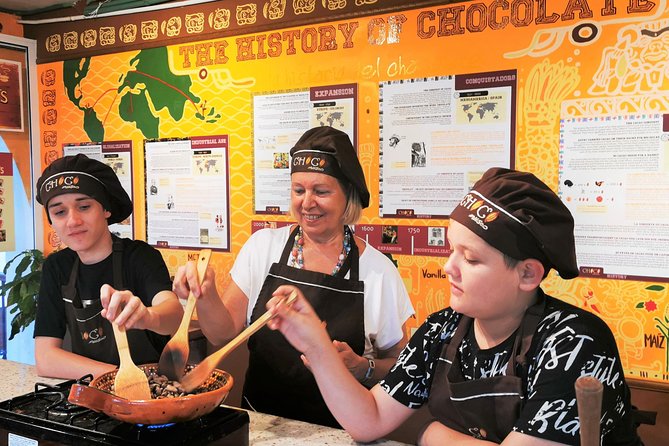
The tasting portion gives the workshop its rhythm. You may roast cacao beans, shell them, use the shells to make cacao tea, and prepare hot chocolate from the bean. You can also taste several chocolate products connected to the ingredient’s development through time.
This is more useful than a row of identical chocolate samples. Each preparation shows a different side of cacao: the bean itself, the shells, a drink, and the finished confection. You begin to notice how roasting, grinding, sweetening, and adding spices change the flavor.
The class may also include several styles of hot cocoa. That makes the experience especially suitable for people who think they already know hot chocolate. The point is not only sweetness. It is seeing how the drink has changed across cultures and periods.
Bring your attention to the tasting, since there may not always be water available between samples. One participant specifically suggested water for cleansing the palate. You can ask for it, but do not assume it will be provided as part of the session.
The tasting is also a good reason to avoid rushing in immediately after a heavy meal. The class is not described as a full lunch, but you will sample enough chocolate and drinks that a lighter schedule makes sense.
Same bay, a completely different kind of day:
- Puerto Vallarta Best Zipline Canopy + Tequila and Speed Boat Ride
★ 5.0 · 3,786 reviews - Winner 2025 Downtown Vallarta Food Tour with Vallarta Food Tours
★ 5.0 · 3,738 reviews - Extreme Adventure, Wildest Bridge, ATV & Ziplines
★ 5.0 · 3,179 reviews - Mega Yacht ALL INCLUSIVE Yelapa Waterfall & Snorkeling Adventure
★ 5.0 · 2,515 reviews
Making your own chocolate to take home
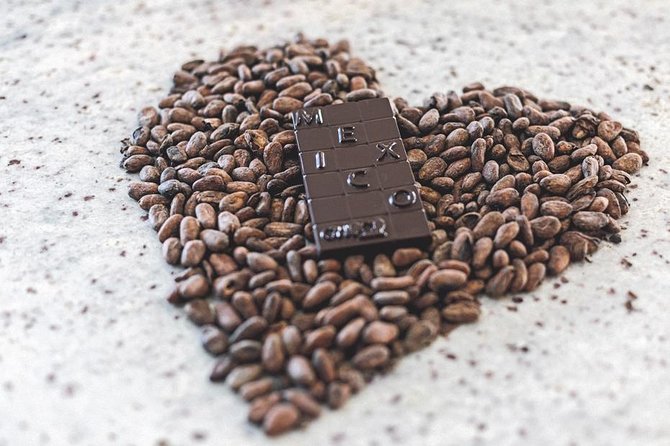
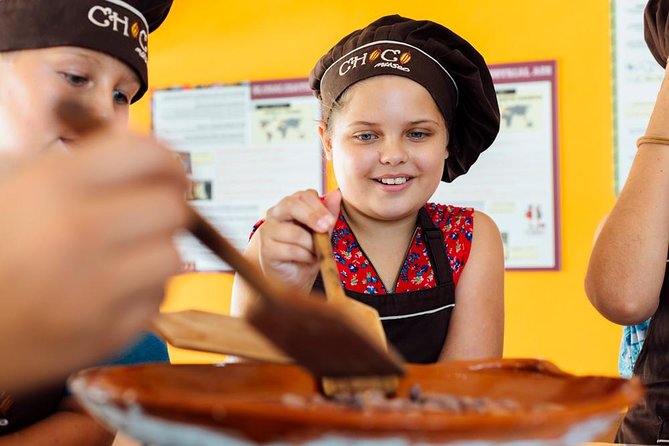
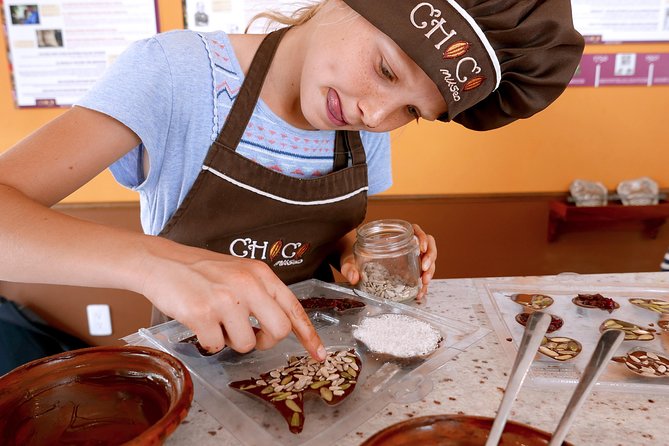
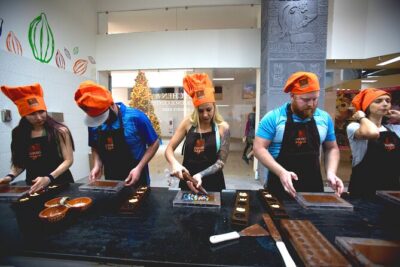
The practical finale is the part most people remember. You create chocolate molds and customize them with toppings, spices, and other ingredients. The aim is not to produce perfect professional confections. It is to let you make a bar that reflects your own taste.
That freedom works well for families. A five-year-old can take part, and older children can make choices about flavor and decoration. Adults get something to do beyond taking photographs. The hands-on work also keeps the class moving after the history and tasting portions.
You wear an apron and hat during the workshop. Cacao beans, chocolate, and toppings are included, so you do not need to bring supplies. Your finished chocolates are yours to take with you, though you may need to allow them to set before handling them. The supplied information does not specify how long that takes, so follow the guide’s instructions on the day.
This is also where expectations matter. You are making custom bars in a short class, not training as a professional chocolatier. If you want advanced candy-making techniques, a separate truffle or pastry class may suit you better. For a first introduction, the simple format is a strength.
Why families and mixed-age groups fit well
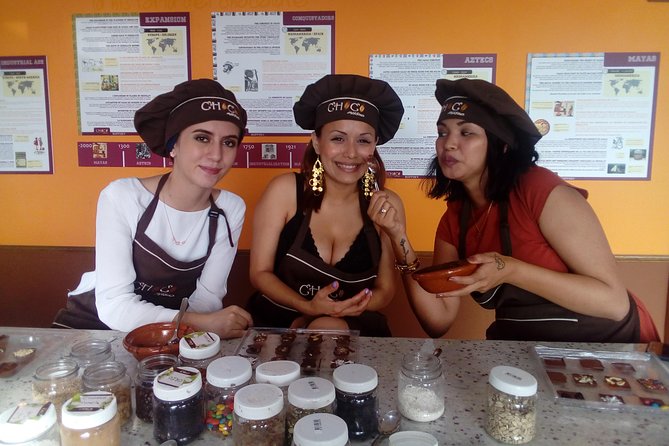
The activity is open to everyone age five and older. That age range makes it one of the easier indoor activities to add to a Puerto Vallarta family schedule, especially during a hot afternoon or when you need a break from outdoor sightseeing.
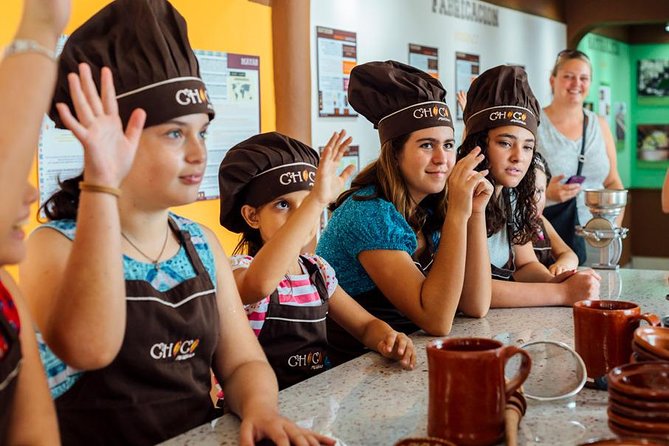
The guides are used to balancing children and adults. One class kept a nine-year-old and a thirteen-year-old involved through the history, tastings, and final chocolate-making. Another family included a five-year-old who had a good time with the drinks and chocolate bars.
The class can also work for a mixed-age family group. A 91-year-old participant using a walker and an adult family member with several disabilities were able to take part, with the help of the handrails and caring instruction. That does not guarantee the same ease for every visitor, so contact the provider if your party has specific accessibility needs.
Children who are easily bored by talks will do best if they know the hands-on portion is coming. The lesson has visual posters, tasting, and practical work, but it is still a guided educational activity. Rod, Elias, Martin, and Zoar are praised for using humor and interaction to keep the pace lively.
Heat, seating, and other practical details
Puerto Vallarta’s weather deserves attention. One failed visit involved an unusually hot, humid day and an upstairs room that did not seem cool before the scheduled activity. The museum explained that air-conditioning is normally turned on before the workshop and during the class, but conditions may not always feel comfortable right away.
If you are booking in the hottest part of the day, arrive prepared for the weather and ask about the room if it feels warm. This is a fair concern because you sit on counter-height stools and remain indoors for about two hours. The provider states that air-conditioning is used during the workshop, but comfort can still vary.
The activity ends back at the museum. There is no hotel pickup, drop-off, or transportation included. The mobile ticket is convenient, and confirmation is provided when you book. Free cancellation is available until 24 hours before the start time. Inside that 24-hour window, you do not receive a refund, and changes are not accepted.
A customary tip of 15 to 20 percent may be given to the teacher if you enjoyed the workshop. It is not included in the listed price.
Is $62.90 good value?
At $62.90, this costs more than dropping into a chocolate shop for a sample. The difference is that you receive a guided museum experience, historical context, tastings, supplies, and a finished product to take home.
I consider it good value for families, couples, and curious food lovers who want a structured activity. The small group helps justify the cost, as does the amount of participation. You are occupied for roughly two hours rather than spending ten minutes at a counter.
The value is weaker if you mainly want to buy Mexican chocolate or taste a few sweets. In that case, visit the shop and spend less. The workshop makes sense when you want the story behind cacao and enjoy making something yourself.
Who should book this experience?
I would choose this workshop for a family with children five and older, a couple looking for a relaxed indoor activity, or anyone interested in Mexican food traditions. It is also a smart choice for a hot afternoon when you want an activity that does not depend on good beach weather.
It suits beginners better than serious confectioners. You do not need prior cooking experience, and the guide provides the ingredients and equipment. The class is social, but the small group keeps it from feeling like a crowded attraction.
I would think twice if you dislike sweet foods, have trouble with counter-height seating, or need a fully step-free venue. I would also confirm the room temperature in advance during especially hot weather.
Should you book the Bean to Bar workshop?
Yes, if you want more than a chocolate tasting. The strongest parts are the connection to Olmec, Maya, and Aztec cacao traditions, the several drink preparations, and the chance to make custom bars with your own toppings.
Book it early if your dates are fixed, since it is commonly reserved about 20 days ahead. Choose a time that fits your energy and the weather, arrive a little early, and ask about samples and air-conditioning. For a modest group activity with food, culture, and a take-home result, ChocoMuseo offers a well-rounded afternoon in central Puerto Vallarta.
FAQ
Where does the Bean to Bar workshop take place?
The workshop takes place at ChocoMuseo Puerto Vallarta, at Josefa Ortiz de Domínguez 128, Centro, 48300 Puerto Vallarta, Jalisco, Mexico.
How long does the workshop last?
The experience lasts approximately two hours.
How much does the workshop cost?
The listed price is $62.90 per person.
Is transportation included?
No. You arrange your own transportation to and from ChocoMuseo. The activity begins and ends at the museum.
What language is the workshop offered in?
The workshop is offered in English.
What is included in the price?
The price includes a museum guide, cacao beans, chocolate, toppings, an apron, and a hat for use during the workshop.
Can children participate?
Yes. The activity is open to children age five and older.
How many people can join the class?
The stated maximum is eight participants. Group size can vary slightly, as one account described nine people in total.
What is the cancellation policy?
You can cancel at least 24 hours before the start time for a full refund. Cancellations or changes made less than 24 hours before the experience are not refunded or accepted.
More Workshops in Puerto Vallarta
- Puerto Vallarta Cooking Class Experience with Market Tour
★ 5.0 · 698 reviews - Private Market Tour & Cooking Class in Puerto Vallarta with Manu
★ 5.0 · 241 reviews - Surf lessons in Puerto Vallarta and Nayarit
★ 5.0 · 137 reviews - Private Surf Lesson Experience at Puerto Vallarta
★ 5.0 · 115 reviews
More Drinking Tours in Puerto Vallarta
- Yelapa Waterfall, BBQ at Exclusive Majahuitas Beach & Open bar
★ 4.5 · 760 reviews - Las Caletas Beach & Adventure Park with buffet lunch and open bar
★ 4.5 · 755 reviews - Luxury Yacht & Snorkel with All inclusive Open bar and lunch
★ 4.5 · 754 reviews - Puerto Vallarta Luxury Sailing with Premium Open bar & lunch
★ 5.0 · 301 reviews
New in Puerto Vallarta
- Puerto Vallarta: All you can drink Bar Crawl★ 4.8 · 4 reviews
- Whale Watching Guaranteed Experience in Puerto Vallarta★ 5.0 · 7 reviews
- Yelapa: Catamaran Cruise with Lunch and Open Bar★ 4.5 · 4 reviews
- Outdoor Zipline Adventure★ 4.8 · 6 reviews
- Puerto Vallarta: Versalles at Night Gastro Tour & Cocktails★ 4.7 · 4 reviews
- Surf Lesson for Beginners in Sayulita & Punta de Mita★ 5.0 · 3 reviews
- Whale Watching★ 4.0 · 10 reviews
- Sunset Hike to a secluded Beach + Mexican snack★ 5.0 · 8 reviews
Puerto Vallarta Chocolate Workshops, compared.
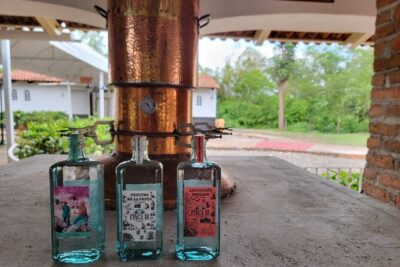
Finca 18 Puerto Vallarta Tequila Tour + Chocolate Pairing
Read our review →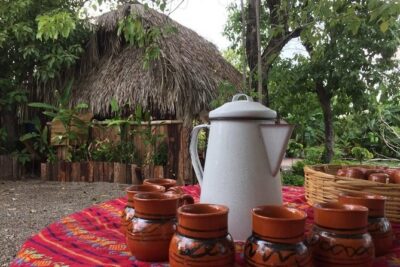
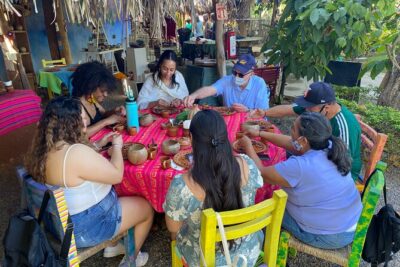
Sayulita Magical Town Tour: Local food, and chocolate.
Read our review →
Private Make Your Own Chocolate Experience in Puerto Vallarta
Read our review →
Browse the lists this tour appears in