
Reviewed · PUERTO VALLARTA
Puerto Vallarta: Baby Turtle Release in Conservation Area
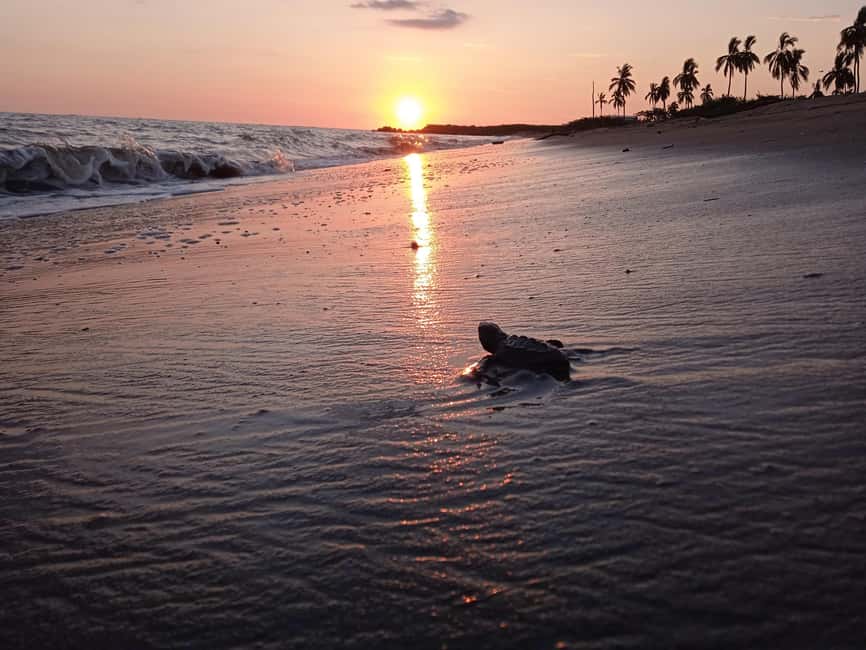
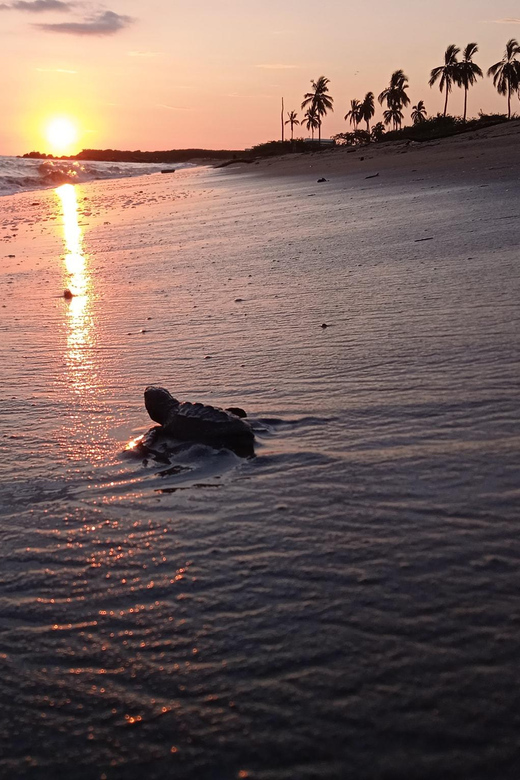
A tiny olive ridley turtle scrambles toward the surf while the sun drops behind Puerto Vallarta’s bay. That is the heart of this hands-on conservation experience, and it is far more meaningful than simply spotting wildlife from a boat. You learn how local workers protect nests, then help send a hatchling into the sea.
I like two things especially: the conservation lesson gives the release real meaning, and guides such as Eduardo, Eddie, and Carlos bring warmth and humor to the group. The main catch is simple: turtles do not follow a booking calendar. If none hatch that day, you must reschedule or cancel, so book early in your stay when possible.
Key things to know before booking
- The release depends on nature: No hatchlings may be available on your chosen date, but you can reschedule or cancel if that happens.
- The walk takes about 15 minutes each way: You reach the camp on foot from the meeting point, along the beach area.
- The lesson comes before the emotional moment: You learn about olive ridley turtles, nest searches, egg collection, and incubation.
- Sunset is part of the experience: The release takes place with views across Puerto Vallarta’s bay.
- The meeting point takes care: Find the end of Paseo Bocanegra through Marina Vallarta, and wait for the guide there.
- It is a conservation activity, not a polished resort show: Expect a basic camp setting, insects, and limited restroom facilities.
Why releasing an olive ridley turtle feels different
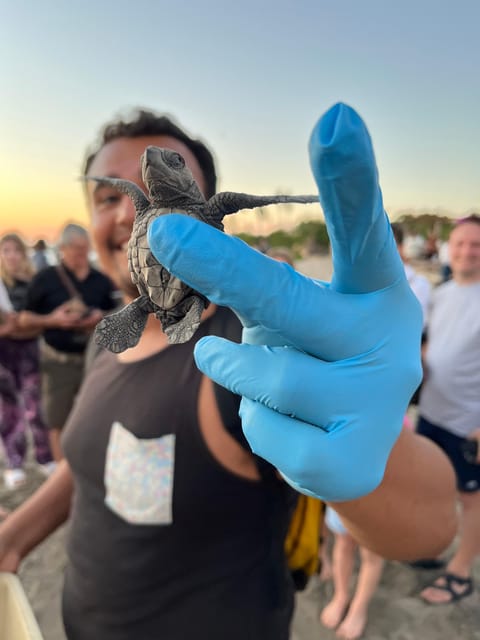
The release lasts only a few minutes, but the preparation gives it weight. You do not simply receive a baby turtle and pose for a picture. First, you hear how sea turtles live, nest, hatch, and face danger. Then you watch the tiny animal begin its first trip into the ocean.
The olive ridley is the focus here. Local conservation workers look for nests and collect eggs so they can be protected and incubated in a controlled area. That work helps reduce the risks faced by eggs on the beach, while also giving you a close look at the effort required before a turtle ever reaches the water.
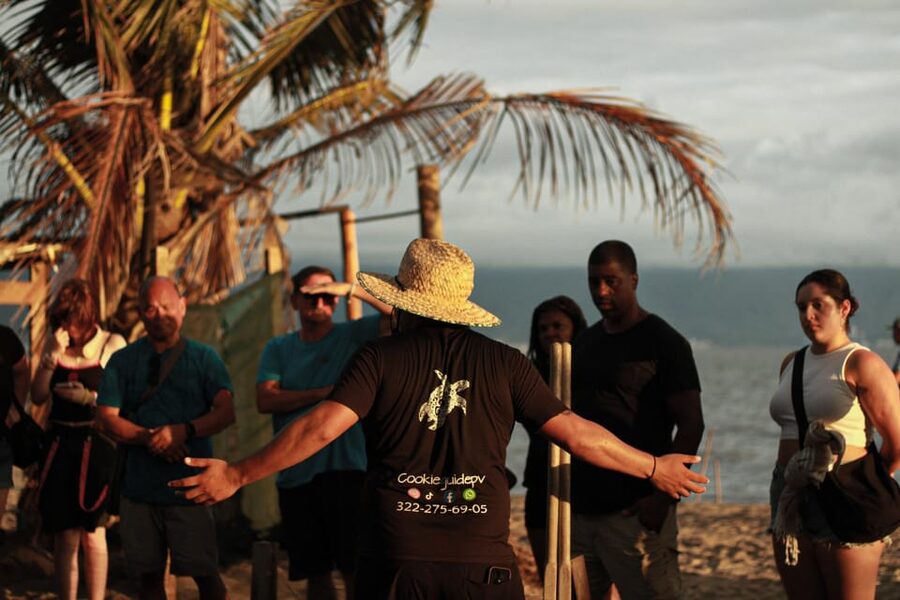
The guides make the lesson accessible for mixed-age groups. Eduardo has led groups in both English and Spanish, and other guides named in the activity information include Eddie and Carlos. Their role is not just to explain facts. They also organize the release, answer questions, and help the group keep calm and respectful around the hatchlings.
You may be able to name your turtle or make a wish before setting it down. That small ritual has become part of the emotional pull of the experience, especially for families. Still, the animal is not a pet or a souvenir. The point is to let it move toward the sea with as little interference as possible.
More turtle release evenings in Puerto Vallarta:
- Release of Sea Turtles in Camp Tortuguero
★ 5.0 · 124 reviews - Sea Turtle Release – A Puerto Vallarta Conservation Adventure
★ 5.0 · 120 reviews - Puerto Vallarta: Sea turtle release at Sunset
★ 5.0 · 15 reviews
Meeting near Marina Vallarta, then walking to the camp
The meeting point is at the end of Paseo Bocanegra. The clearest access is through Marina Vallarta via Albatros Street. Continue across Paseo Bocanegra toward the end, where you should see a golf course, a wall with drawings, and the beach.
This is not the kind of meeting point where you should casually wander around looking for a sign. The directions matter. If you arrive early, wait at the meeting point and do not walk to the campground alone. The guide meets you there and leads the group onward.
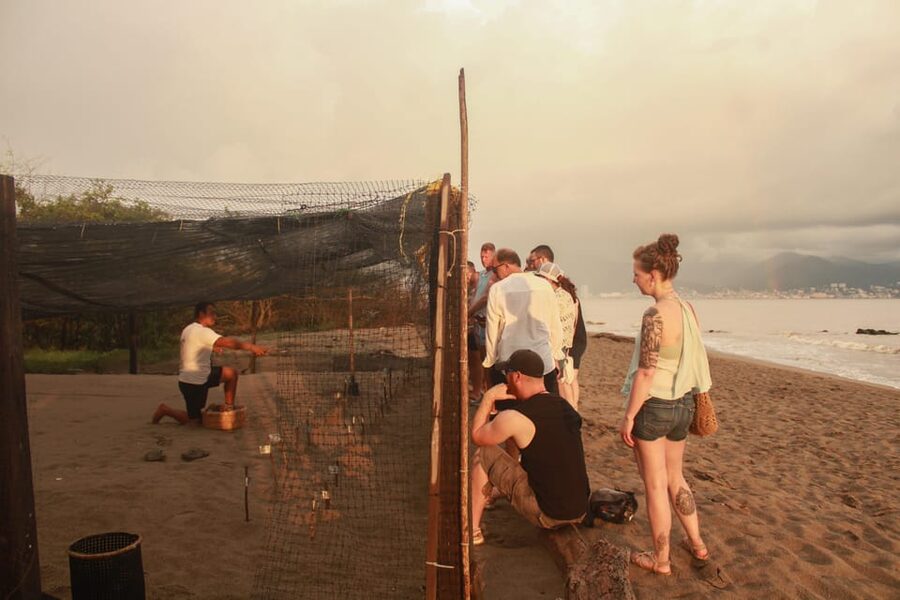
From the starting point, the walk takes about 15 minutes. You then spend roughly 45 minutes at the conservation camp for the main lesson and demonstration. Another 20 minutes is set aside for wildlife viewing, followed by the walk back.
The route is part of the practical equation. You need comfortable clothing and a reasonable level of fitness. The activity is not suited to wheelchair users, people with mobility impairments, or those with a low level of fitness. Children under five can attend without paying, but they may only watch the release and cannot take part.
What you learn at the conservation camp
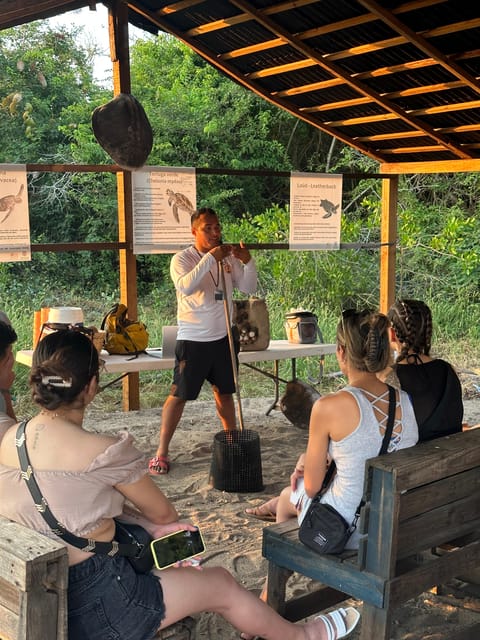
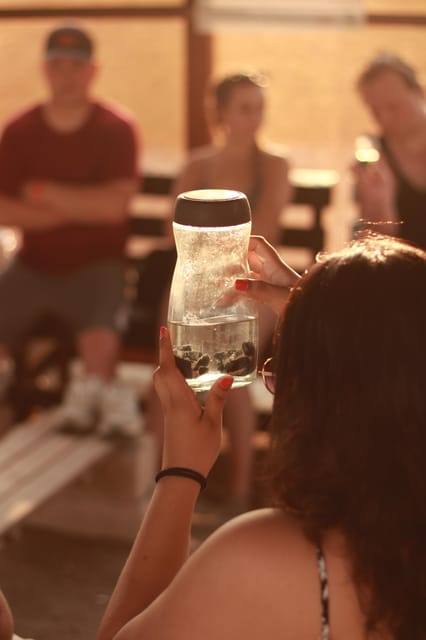
The camp visit is the educational center of the afternoon. You learn the olive ridley turtle’s life cycle and see how conservation workers search for nests and eggs. The demonstration explains how eggs are collected and placed in incubation areas before they hatch.
This step matters because it shows the work behind the sunset photo. A hatchling reaching the ocean is the final scene in a much longer process. Workers must find nests, protect eggs, monitor the incubation area, and wait for the right moment to release the young turtles.
The presentation also helps you understand why beach conditions matter. The conservation work is not just about cute baby animals. It is about reducing hazards during the most vulnerable stage of a turtle’s life and teaching people how to behave in areas where turtles lay eggs.
The talks are designed for a broad age range. A 10-year-old can enjoy the small turtles, while an adult can take away a clearer understanding of conservation work. Families should still remember that the setting is basic rather than museum-like. You are visiting a working camp in a natural area, not a visitor center with polished facilities.
Sunset views and the release itself
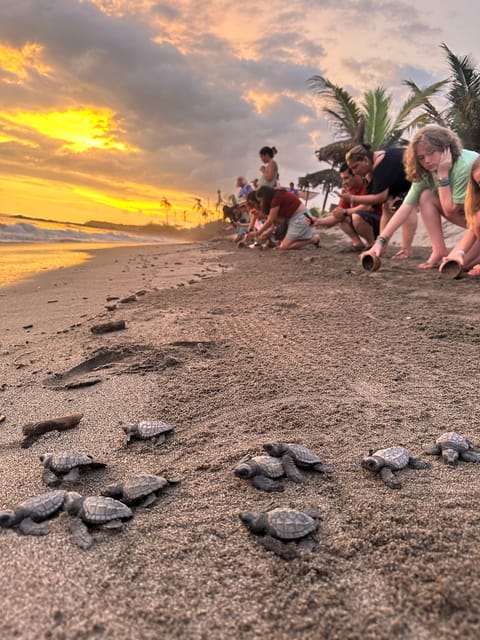
After the camp visit, the group returns toward the beach for the release. The timing allows you to watch the sunset over the sea, with views across the bay. Weather can affect the scene. One account describes a storm passing quickly before a clear sunset, while another notes that rain gear was provided during a wet outing.
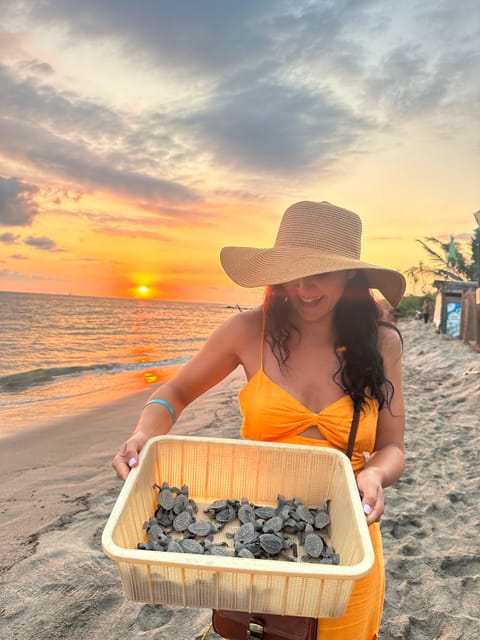
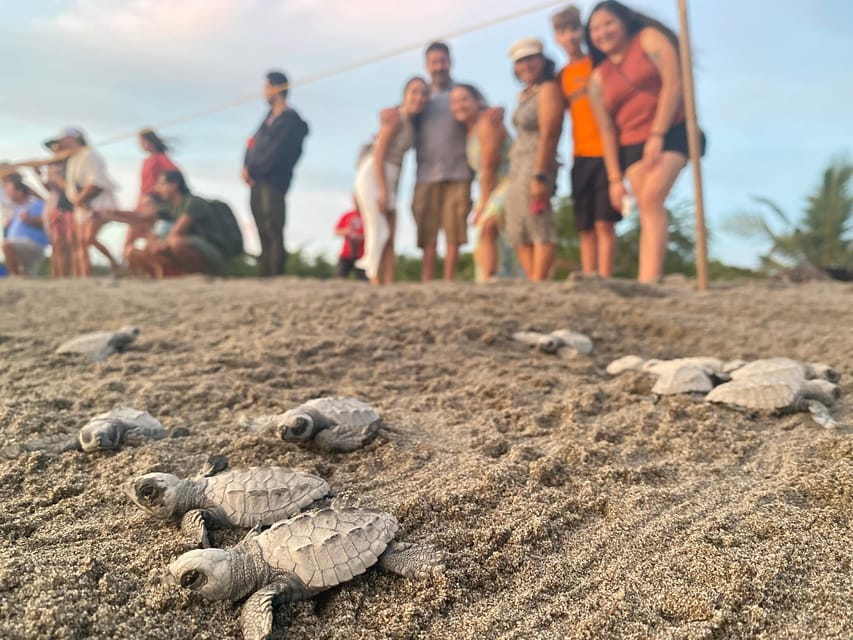
When hatchlings are available, each participating person may receive a baby turtle for release. You place it on the beach and watch it make its way toward the water. The guides explain how to handle the moment, so you are not left guessing what to do.
This is also when the activity becomes surprisingly quiet. People tend to stop checking their phones and watch the tiny animals move. The photographer takes pictures during the experience, allowing you to focus on the release instead of trying to document every second yourself.
The photo policy needs clarification before you go. The included information says photos are included, and some descriptions say a photographer sends a link to the group. One account says photos cost extra, while another says they were included in the tour price. Ask the operator what is included on your booking and what, if anything, costs extra.
Do not expect to hold a turtle for a long portrait session. The goal is a safe release, not an animal encounter built around repeated handling. That is good conservation practice, even if you hoped for a close-up photo with your hatchling.
Same bay, a completely different kind of day:
- Puerto Vallarta Best Zipline Canopy + Tequila and Speed Boat Ride
★ 5.0 · 3,786 reviews - Winner 2025 Downtown Vallarta Food Tour with Vallarta Food Tours
★ 5.0 · 3,738 reviews - Extreme Adventure, Wildest Bridge, ATV & Ziplines
★ 5.0 · 3,179 reviews - Mega Yacht ALL INCLUSIVE Yelapa Waterfall & Snorkeling Adventure
★ 5.0 · 2,515 reviews
The guides make the difference
The guide names that come up in the activity details include Eduardo, Eddie, Carlos, and Tony. Eduardo is noted for handling English and Spanish at the same time, which helps when a group includes both languages. Carlos has worked with groups ranging from toddlers to seniors, and Eddie is described as especially engaging.
The strongest part of the guiding is the mix of information and feeling. You get useful facts about turtle species, survival, nesting, and conservation, but the presentation does not treat the animals like a classroom diagram. The guides clearly care about the work, and that care carries through to the release.
Group size can reach about 20 people. That is large enough to create a shared moment, but it also means the experience is not private. You may need to stand with the group during the talk and wait for instructions during the release.
The activity is offered in English and Spanish. If you need one language in particular, confirm that when you book. The guide may speak to a mixed group in both languages, which can make the lesson longer but also makes the experience welcoming for bilingual families and couples.
What the $40 price really covers
At $40 per person, the activity offers a strong value if you want an educational nature experience rather than a full-day excursion. The price covers the guide, the conservation lesson, the turtle release when hatchlings are available, water, and photos according to the included information.
You also receive access to a local conservation effort that requires daily work before your visit begins. The price is not paying only for two and a half hours at the beach. It helps support an activity built around protecting nests and incubating eggs.
Transportation is not included. You must reach the meeting point yourself, and one family used an Uber to get there and back. The meeting point is somewhat out of the way, below the area where airplanes take off, so follow the directions carefully and allow time to get there.
A small extra donation may be appropriate if you feel the conservation work deserves more support. It is not listed as required, but donations can help a local nonprofit continue its work. You should treat that as optional, not as part of the advertised price.
Practical drawbacks to consider
The biggest uncertainty is the hatch date. You can reserve a place and still arrive on a day when no turtles hatch. The operator allows you to reschedule or cancel in that situation, and communication has been helpful when a release needed to move to another day.
For that reason, I would book this early in your Puerto Vallarta stay rather than on your final afternoon. That gives you a better chance of finding another suitable date if nature changes the plan.
Facilities are basic. Restrooms at the site may be limited, and one account reported portable toilets with broken doors and no toilet paper. Bring your own tissues and do not expect resort-level comfort.
Insects are another real issue. Bring insect repellent, even if you think you will not need it. One person regretted leaving it behind. Biodegradable sunscreen is required on the packing list, along with comfortable clothing.
The beach area may also have some litter. Conservation work and site maintenance are not always the same thing, so you may notice trash along the beach. That does not erase the value of the program, but it is part of the setting.
Drones, alcohol, and drugs are not allowed. People with respiratory issues, animal allergies, high blood pressure, or limited fitness should not book this activity. The company also lists it as unsuitable for children under five, despite allowing them to attend free as observers.
Who will enjoy this most
I would recommend this for families with children old enough to understand that the turtle is being released, not kept. It is also a good fit for couples and solo visitors who want a quiet nature activity with a clear local purpose.
The experience suits anyone who likes learning how conservation works at ground level. You see the nest and egg process, hear about the turtle life cycle, watch the sunset, and take part in the release. That combination gives the outing more substance than a simple photo stop.
It is less suitable if you need a highly comfortable facility, guaranteed wildlife, private transportation, or a fully accessible route. It also may disappoint if your main goal is extended animal contact. The turtle is handled only as needed for release, and the schedule depends on hatching.
Plan on about 2.5 hours. The advertised route includes two 15-minute walks, a 45-minute camp visit, and about 20 minutes of wildlife viewing. Add time for getting to the meeting point and arranging your ride home.
Should you book the turtle release?
Book it if you can accept the uncertainty of nature and want an experience that links a beautiful sunset to real conservation work. The lesson, the passionate guides, and the chance to watch a hatchling reach the sea make the $40 price fair.
Book early in your trip, bring repellent and tissues, follow the meeting-point directions, and ask about the photo policy. If no turtles hatch, use the rescheduling option rather than treating the outing as a failure.
Skip it if you need wheelchair access, dislike basic beach facilities, or cannot manage the walk. For everyone else, this is a short, memorable way to see Puerto Vallarta from the edge of the sea and support the people working to protect its turtles.
FAQ
How long does the baby turtle release experience last?
The activity lasts about 2.5 hours, including the walk to the camp, the conservation lesson, wildlife viewing, the release, and the walk back.
How much does the experience cost?
The listed price is $40 per person.
Where is the meeting point?
Meet at the end of Paseo Bocanegra. The recommended access is through Marina Vallarta via Albatros Street. Continue to the end, where you should see a golf course, a wall with drawings, and the beach.
Is transportation included?
No. Transportation is not included, so you must arrange your own way to and from the meeting point.
What happens if no turtles hatch that day?
You can reschedule or cancel if no turtles hatch on the day of your reservation.
What languages are available?
The experience is offered in English and Spanish.
Can children under five participate?
Children under five do not need a ticket, but they may only observe the release and cannot take part in releasing a turtle.
What should I bring?
Bring biodegradable sunscreen, comfortable clothing, and insect repellent. Tissues may also be useful because restroom supplies at the camp can be limited.
Is the activity accessible for wheelchair users?
No. The activity is not suitable for wheelchair users, people with mobility impairments, or people with a low level of fitness.
New in Puerto Vallarta
- Puerto Vallarta: All you can drink Bar Crawl★ 4.8 · 4 reviews
- Whale Watching Guaranteed Experience in Puerto Vallarta★ 5.0 · 7 reviews
- Yelapa: Catamaran Cruise with Lunch and Open Bar★ 4.5 · 4 reviews
- Outdoor Zipline Adventure★ 4.8 · 6 reviews
- Puerto Vallarta: Versalles at Night Gastro Tour & Cocktails★ 4.7 · 4 reviews
- Surf Lesson for Beginners in Sayulita & Punta de Mita★ 5.0 · 3 reviews
- Whale Watching★ 4.0 · 10 reviews
- Sunset Hike to a secluded Beach + Mexican snack★ 5.0 · 8 reviews